
Ibn Rajab al-Hanbali: The Foundational Principle Of All The Principles of Medicine
Topics:
Medicine
© HealthyMuslim. See Terms and Conditions
Copy Link
Email
Print
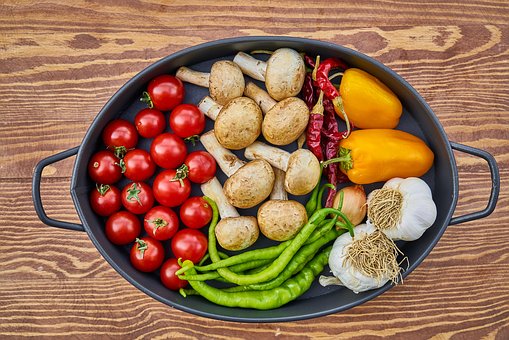
The great scholar, Ibn Rajab al-Hanbalee (rahimahullaah), in his book Jaami ul-'Uloom wal-Hikam (an explanation of an-Nawawee's Forty Hadeeth) quotes the following hadeeth:
Miqdaam bin Ma'dee Kariba said: I heard the Messenger of Allaah (sallallaahu alayhi wasallam) say: "The son of Aadam does not fill a container worse than his stomach. It is sufficient for the son of Aadam to take enough morsels of food to keep his back straight (keep him able-bodied). And if it is necessary, then a third for his food, a third for his drink, and a third for his breath".
Then Ibn Rajab al-Hanbalee comments:
And then Ibn Rajab comments upon this statement of Ibn Abee Maasawaih, saying:
Then Ibn Rajab brings numerous quotations, amongst them:
Benefits
- As has been mentioned by Ibn al-Qayyim, the majority of illnesses arise out of improper dietary habits, and Ibn Rajab al-Hanbalee has stated, based upon the Prophetic hadeeth, that the most fundamental and foundational principle in medicine is related to food intake. Ibn al-Qayyim mentions that a balance of both quality and quantity (nutrients, in the right amounts) is necessary to keep the body healthy and free from disease, and also states that the majority of diseases are "caused by consuming more food before the food taken previously has been properly digested", which leads to dysbiosis and the build up of improperly digested food in the digestive tract (subsequently affecting nutrient metabolism and uptake).
- A major part of the bodies immune system is composed of the gut (that which lies between the point of food intake and elimination of waste), and it is now said that this constitutes 80% of the body's immunity. This has been called the internal ecosystem of the gut and the nature and condition of this "terrain" is what affects a person's health in a fundamental way. It is now established that the the gut commensal flora (bacteria that inhabit the gut), along with nutrients, are directly involved in and modulate the immune system. The gut is technically "outside" your body, and is heavily laden with macrophages, lymphocytes and other cells that are involved in immune responses.
Although there are abundant papers in this regard we'll just mention a couple for the sake of brevity:
Cunningham-Rundles S. Department of Pediatrics, Cornell University, Weill Medical College, New York, New York, USA. Nutrition and the mucosal immune system. Curr Opin Gastroenterol. 2001 Mar;17(2):171-176.
Gut-associated lymphoid tissue is the dominant site for the initiation of mucosal immune response. Mucosal immunity depends on regulatory signals; nutritional elements, including fats, amino acids, and micronutrients, are critical cofactors for these signals. Nutrients specifically affect lymphocyte influx and migration, mononuclear cell activation, and the differentiated expression of immune response. The molecular basis of nutrient action has been shown to involve effects on receptor regulation, adhesion molecule expression, and the pattern of cytokine production. The gastrointestinal mucosal immune system is the major site for host interaction with microbes and provides a barrier against systemic access for food antigens and microbes. Nutrient metabolism has unique and direct impact on the host defense system of gut-associated lymphoid tissue and therefore has potential for widely disseminated impact on systemic immune response.R. Herich and M. Levkut. Lactic acid bacteria, probiotics and immune system. Vet. Med. Czech, 47, 2002 (6): 169-180.
Mucous membranes of the body are in direct contact with the outside environment and they are colonised by a large number of different bacteria... Probiotic micro-organisms including lactic acid bacteria (LAB) positively influence the composition of the gut microflora; they stimulate the production of secretory IgA; they affect the targeted transportation of the luminal antigens to Peyer's patches and they increase the production of IFN-?. LAB stimulate the activity of non-specific and specific immune cells. These properties of the LAB depend on the particular species or strain of bacteria. These singularities are probably determined by differences in the cell wall composition. LAB belong to a group of beneficially acting bacteria and they are able to eliminate damage to the gut microenvironment; they stimulate local and systemic immune responses and they maintain the integrity of the gut wall ... Different mechanisms could influence the composition of the micro-organisms that colonise the digestive tract. The two important are: antagonism among bacteria and local immunity. Disturbances in the ecological balance in the gut lead to the growth of harmful bacteria and to their possible translocation to internal organs, which induces disease. Beneficially acting bacteria positively influence the immune system of the host. - A person can harm their internal "terrain" (their gut) by improper dietary habits which can lead to the build up putrified materials (undigested food), products of fermentation (due to indigestion, wrong combination of foods), toxins and so on. This puts the healthy, efficient gut ecosystem into less favourable conditions, changing its nature, and affects the body's ability to digest and absorb nutrients and also allows for harmful opportune bacteria to have a more favourable environment to outcompete the beneficial bacteria This leads to a person being more prone to infections and other systemic ailments, due to subsequent impairment of the immune processes originating in the gut, as well as impairment in nutrient absorption and uptake. This also explains why, when a food poisoning outbreak occurs, not all people succumb to it. This is due to the differences in their internal gut ecosystems some of which have become favourable (due to dietary abuse, or use of antibiotics) for harmful micro-organisms to multiply and outcompete the good bacteria, whereas others are not affected because their internal ecosystem is in good shape and can readily deal with harmful microorganisms.
- To give a similitude for the above point, if you imagine a town whose back streets are always kept clean, opportune scavengers such as rats will not emerge and be able to multiply. However, if waste is allowed to build up, then all sorts of opportune organisms will show up, because this type of environment is one in which they thrive and live upon. If this situation is allowed to continue unchecked then it will lead to widescale (logistical) problems affecting the whole town, and pretty much everyone in it. The build-up of putrified, fermented materials in the gut (due to indigestion, being the result of improper dietary habits) over time creates an environment less favourable to the good bacteria and more favourable to other harmful micro-organisms. This change in the environment subsequently affects nutrient absorption, immune system modulation and regulation and so on. This will then manifest itself over many years in the form of a variety of different ailments in different people. Such toxic build up in the gut can also get into the blood-stream over time (see the above paper) allowing harmful toxins and microbes to gain systemic access (blood, organs and tissues). From this you can also see how hijaamah (blood cupping therapy) is beneficial for cleansing the blood of it's toxic build up.
- The best preventative treatment for the majority of diseases is to act upon the advice above from the hadeeth and from the likes of Ibn Rajab, Ibn Abee Maasawaih, Ibn Kaladah and Ibn al-Qayyim. It costs you nothing, has no side-effects, is entirely free, and will potentially save you a lifetime of suffering and cost. And there is also reward for it if you implement it with the right intention.
Link to this article: Show: HTML Link • Full Link • Short Link
Share or Bookmark this page: You will need to have an account with the selected service in order to post links or bookmark this page. 


|
Subscribe via RSS or email: Follow us through RSS or email. Click the RSS icon to subscribe to our feed. 

|
Related Articles:
- Allaah Has Combined All of Medicine (at-Tibb) in Half a Verse of the Qur'aan
- The Islamic Ruling On the Use of Medicinal Treatment (at-Tadaawee) - Part 4
- The Islamic Ruling On the Use of Medicinal Treatment (at-Tadaawee) - Part 3
- The Islamic Ruling On the Use of Medicinal Treatment (at-Tadaawee) - Part 1
- The Islamic Ruling On the Use of Medicinal Treatment (at-Tadaawee) - Part 2
- Ibn Rajab al-Hanbali: The Foundational Principle Of All The Principles of Medicine
- Food as Medicine by Jerry Brunetti - Highly Informative Video
You must be registered and logged in to comment.

Most Popular

Latest Articles



Popular Subjects
Health, fitness and longevity
Based upon the principles of health
in the Qur'an and Prophetic Traditions.
HealthyMuslim.Com
There are two bounties in which
most people lose out: good health
and free time. Al-Bukhari.
The information on this site is provided for educational purposes only. It is not intended as a substitute for professional advice of any kind.