
Copy Link
Email
Print
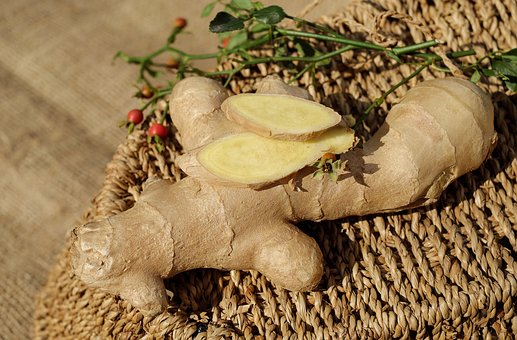
Ginger is an herb. The rhizome (underground stem) is used as a spice and also as a medicine. It can be used fresh, dried and powdered, or as a juice or oil. Ginger is commonly used to treat various types of "stomach problems," including motion sickness, morning sickness, colic, upset stomach, gas, diarrhea, nausea and vomiting after surgery, as well as loss of appetite. Other uses include treating upper respiratory tract infections, cough, and bronchitis.
Choudhury D, Das A, Bhattacharya A, Chakrabarti G. Aqueous extract of ginger shows antiproliferative activity through disruption of microtubule network of cancer cells. 1. Food Chem Toxicol. 2010 Oct;48(10):2872-80. Epub 2010 Jul 18.
Choudhury D, Das A, Bhattacharya A, Chakrabarti G. Aqueous extract of ginger shows antiproliferative activity through disruption of microtubule network of cancer cells. 1. Food Chem Toxicol. 2010 Oct;48(10):2872-80. Epub 2010 Jul 18.
Ginger has a long history of use as traditional medicine for varied human disease. Our present study has shown that the aqueous extract of ginger (GAE) interacts directly with cellular microtubules and disrupts its structure and induces apoptosis of cancer cells as well. The IC(50) values of GAE, as determined from cell viability experiment on human non-small lung epithelium cancer (A549) cells and human cervical epithelial carcinoma (HeLa), were 239.4+7.4 and 253.4+8.9 ?g/ml, respectively. It has been found that the apoptosis of A549 cells by GAE is mediated by up regulation of tumor suppressor gene p53 and alteration of the normal Bax/Bcl-2 ratio followed by down regulation of cellular pro-caspase3. The morphological change of cells upon GAE treatment has also been demonstrated. Both the structural and functional properties of tubulin and microtubule were lost, as confirmed by both ex vivo and invitro experiments. The major component of GAE is poly-phenols (around 2.5%), which consist of ~80% flavones and flavonols. Poly-phenolic compounds are well known to have anti-mitotic properties, and may be further screened for the development of a potential anti-cancer agent.
Link to this article: Show: HTML Link • Full Link • Short Link
Share or Bookmark this page: You will need to have an account with the selected service in order to post links or bookmark this page. 


|
Subscribe via RSS or email: Follow us through RSS or email. Click the RSS icon to subscribe to our feed. 

|
Related Articles:
- Ibn al-Qayyim: Ginger is Beneficial for Digestion, Eyesight and Nausea Among Other Benefits
- Spices for Health
- Cancer Said To Be No. 1 Killer by 2010
- Disease-Fighting Properties of Green Tea
- Regular Exercise 'Prevents Breast Cancer'
- Caution on Triclosan - An Anti-Bacterial In Soaps, Toothpastes, Deodorants And Cosmetics
- Green Tea, Blueberry and Raspberry Fruit Extracts Touted as Potential Cancer Fighters
- Artificial Sweetener Aspartame Is Carcinogenic
- Mobile Phone Use 'Raises Children's Risk of Brain Cancer Fivefold'
- Dr Linus Pauling, Vitamin C Infusions and Cancer
You must be registered and logged in to comment.

Most Popular

Latest Articles


Popular Subjects
Health, fitness and longevity
Based upon the principles of health
in the Qur'an and Prophetic Traditions.
HealthyMuslim.Com
There are two bounties in which
most people lose out: good health
and free time. Al-Bukhari.
The information on this site is provided for educational purposes only. It is not intended as a substitute for professional advice of any kind.