
Flax and Borage Oil Benefit Skin Health
© HealthyMuslim. See Terms and Conditions
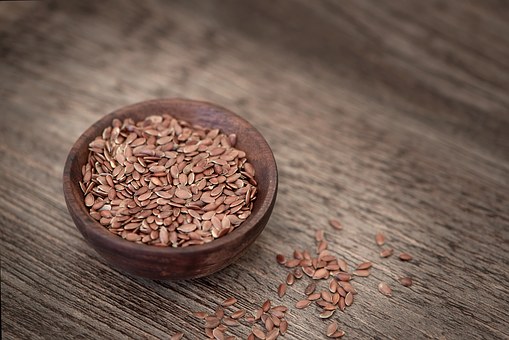
The omega-3 oils from flax and omega-6-rich oils from borage also led to a decrease in skin roughness and so-called skin scaling, according to findings published in the British Journal of nutrition.
The researchers recruited 45 healthy women and randomly split them into three groups. Two groups received daily supplements of flaxseed oil or borage oil (2.2 grams of total fatty acids), while a third received medium-chain fatty acids as the placebo. Skin irritation was induced artificially.
After six and 12 weeks of supplementation with flaxseed, an increase in blood levels of ALA was observed, while increases in GLA were recorded in the group receiving borage oil. The researchers also noted a significant decrease in reddening of the skin in the flaxseed and borage oil groups. No differences were recorded in the placebo group. The roughness and scaling - dry peeling skin - was also decreased significantly after 12 weeks of flaxseed and borage oil supplementation, with no differences in the placebo group.
Oil Composition
According to analysis of the oils, flaxseed consisted predominantly of the omega-3 fatty acid alpha-linolenic acid (ALA), but some omega-6 and monounsaturated oleic acid were present.
Borage oil consisted predominantly of the omega-6 fatty acids gamma-linolenic acid (GLA) and linoleic acid (LA), while oleic acid was also present in relatively high amounts.
Analysis of Results
The researchers suggested various reasons for these results. These included looking at changes to the membrane and cell structure, since fatty acids play a role in cell membrane health.
Another possibility is the role of the fatty acids in inflammation.
"GLA may be elongated to di-homo-gamma-linolenic acid, which is metabolized to PG of the series 1 and to 15-hydroxyeicosatrienoic acid.
"Products of these eicosanoids mediate anti-inflammatory and anti-proliferative effects. However, ALA cannot be metabolized to anti-inflammatory eicosanoids in tissues lacking desaturases. Thus, other mechanisms are likely operative." De Spirt S et al "Intervention with flaxseed and borage oil supplements modulates skin condition in women" British Journal of nutrition Published online ahead of print
Flax is available as whole seeds or in oil form. It can also be taken as vitamin supplements. It's numerous benefits have been explained in detail in previous articles.
Borage, also known as starflower, is a herb. Its seeds are extracted for their rich gamma-linolenic acid (GLA) content (an omega-6 fatty acid), for which it is the highest known plant-based source.
Link to this article: Show: HTML Link • Full Link • Short Link
Share or Bookmark this page: You will need to have an account with the selected service in order to post links or bookmark this page. 


|
Subscribe via RSS or email: Follow us through RSS or email. Click the RSS icon to subscribe to our feed. 

|
Related Articles:
- Flax and Borage Oil Benefit Skin Health
- Amazing Overall Health Boosting, Brain Powering Omega-3 Flax Oil-Protein Recipe From The Budwig Protocol
You must be registered and logged in to comment.

Most Popular



Latest Articles






Popular Subjects
Health, fitness and longevity
Based upon the principles of health
in the Qur'an and Prophetic Traditions.
HealthyMuslim.Com
There are two bounties in which
most people lose out: good health
and free time. Al-Bukhari.