
Antioxidant and Inhibitory Effect of Red Ginger (Zingiber Officinale Var. Rubra) and White Ginger (Zingiber Officinale Roscoe) on Fe(2+) Induced Lipid Peroxidation in Rat Brain in Vitro
© Authored by PubMed
Topics:
Ginger
© HealthyMuslim. See Terms and Conditions
Copy Link
Email
Print
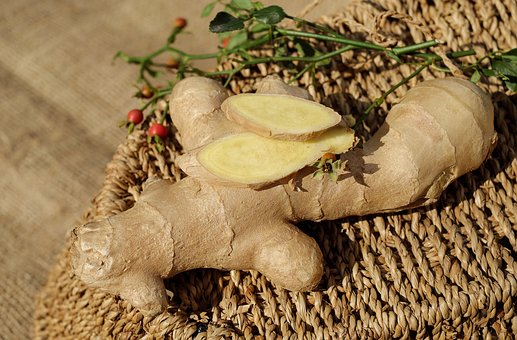
Ginger is an herb. The rhizome (underground stem) is used as a spice and also as a medicine. It can be used fresh, dried and powdered, or as a juice or oil. Ginger is commonly used to treat various types of "stomach problems," including motion sickness, morning sickness, colic, upset stomach, gas, diarrhea, nausea and vomiting after surgery, as well as loss of appetite. Other uses include treating upper respiratory tract infections, cough, and bronchitis.
Oboh G, Akinyemi AJ, Ademiluyi AO. Antioxidant and inhibitory effect of red ginger (Zingiber officinale var. Rubra) and white ginger (Zingiber officinale Roscoe) on Fe(2+) induced lipid peroxidation in rat brain in vitro. 1. Exp Toxicol Pathol. 2012 Jan;64(1-2):31-6. Epub 2010 Jul 3.
Oboh G, Akinyemi AJ, Ademiluyi AO. Antioxidant and inhibitory effect of red ginger (Zingiber officinale var. Rubra) and white ginger (Zingiber officinale Roscoe) on Fe(2+) induced lipid peroxidation in rat brain in vitro. 1. Exp Toxicol Pathol. 2012 Jan;64(1-2):31-6. Epub 2010 Jul 3.
Neurodegerative diseases have been linked to oxidative stress arising from peroxidation of membrane biomolecules and high levels of Fe have been reported to play an important role in neurodegenerative diseases and other brain disorder. Malondialdehyde (MDA) is the end-product of lipid peroxidation and the production of this aldehyde is used as a biomarker to measure the level of oxidative stress in an organism. The present study compares the protective properties of two varieties of ginger [red ginger (Zingiber officinale var. Rubra) and white ginger (Zingiber officinale Roscoe)] on Fe(2+) induced lipid peroxidation in rat brain in vitro. Incubation of the brain tissue homogenate in the presence of Fe caused a significant increase in the malondialdehyde (MDA) contents of the brain. However, the aqueous extract from both varieties of ginger caused a significant decrease in the MDA contents of the brain in a dose-dependent manner. However, the aqueous extract of red ginger had a significantly higher inhibitory effect on both Fe(2+)-induced lipid peroxidation in the rat brain homogenates than that of white ginger. This higher inhibitory effect of red ginger could be attributed to its significantly higher phytochemical content, Fe(2+) chelating ability, OH scavenging ability and reducing power. However, part of the mechanisms through which the extractable phytochemicals in ginger (red and white) protect the brain may be through their antioxidant activity, Fe(2+) chelating and OH scavenging ability. Therefore, oxidative stress in the brain could be potentially managed/prevented by dietary intake of ginger varieties (red ginger and white ginger rhizomes).
Link to this article: Show: HTML Link • Full Link • Short Link
Share or Bookmark this page: You will need to have an account with the selected service in order to post links or bookmark this page. 


|
Subscribe via RSS or email: Follow us through RSS or email. Click the RSS icon to subscribe to our feed. 

|
Related Articles:
- Synbiotic (Probiotic and Ginger Extract) Loaded Floating Beads: A Novel Therapeutic Option in an Experimental Paradigm of Gastric Ulcer
- 4-Shogaol, an Active Constituent of Dietary Ginger, Inhibits Metastasis of MDA-MB-231 Human Breast Adenocarcinoma Cells by Decreasing the Repression of NF-?B/Snail on RKIP
- Inhibition of LPS Binding to MD-2 Co-Receptor for Suppressing TLR4-Mediated Expression of Inflammatory Cytokine by 1-Dehydro-10-Gingerdione From Dietary Ginger
- Zerumbone, a Southeast Asian Ginger Sesquiterpene, Induced Apoptosis of Pancreatic Carcinoma Cells Through P53 Signaling Pathway
- Variation in Concentration and Labeling of Ginger Root Dietary Supplements
- Ginger Root Associated with Preventing Colon Cancer, Study
- Ginger: An Excellent Natural Remedy
- Ginger Beneficial for Relieving Pregnancy-Related Nausea
- Ibn al-Qayyim: Ginger is Beneficial for Digestion, Eyesight and Nausea Among Other Benefits
- Spices for Health
You must be registered and logged in to comment.

Most Popular


Latest Articles





Popular Subjects
Health, fitness and longevity
Based upon the principles of health
in the Qur'an and Prophetic Traditions.
HealthyMuslim.Com
There are two bounties in which
most people lose out: good health
and free time. Al-Bukhari.
The information on this site is provided for educational purposes only. It is not intended as a substitute for professional advice of any kind.