
Watching Television Makes Children Unhealthier
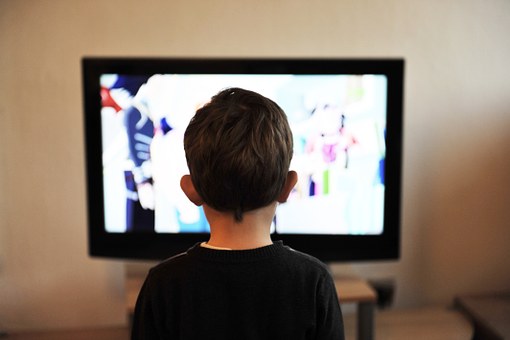
An increasing number of parents today are using the television as an 'electronic babysitter', according to evidence. Some parents tell their children that watching too much TV will make their eyes go square and, although this is not true, evidence is emerging that watching too much TV as a child could mean they end up with a larger waistline.
A new study, featured in BioMed Central's open access journal International Journal of Behavioral nutrition and Physical Activity, has discovered that children's muscular fitness decreases the more hours young children spend in front of the television and that their waist lines become larger as they approach their teens, which can have potential health consequences in their adulthood.
According to recommendations by the American Academy of Pediatrics, children below the age of two years old should not exceed more than two hours of television per day, yet more and more parents appear to use the TV as an 'electronic babysitter'.
Researchers from Montreal University in Canada decided to investigate whether the number of hours spent watching TV during early childhood is linked to lower subsequent physical fitness once these children are at school. The team used participants from the Quebec Longitudinal Study of Child Development, and surveyed the children's parents asking them to report the number of hours their child watched TV per week at the age of 29 and 53 months. Given that muscle strength and abdominal fat are associated with the level of fitness, the researchers examined the children in the second and fourth grade by measuring their waist circumference and using the standing long jump test.
They discovered that for each hour per week of watching TV at the age of 29 months, children scored 0.361 cm less in the Standing Long Jump, which suggests a lower muscle strength compared with those who watched less television at that age. By increasing the weekly TV exposure by just one extra hour between the age of 29 and 53 months predicted an additional 0.285 cm less in the test. Another important finding was the fact that waist circumference at fourth grade increased by 0.047 cm for every hour of television watched between the ages of 29 and 53 months, which translates to a 0.41 cm larger waistline by the age of 10, or a 0.76 cm larger waistline in those who watched over 18 hours of TV a week.
The result could predict that those children who spend an excessive amount of time in front of the TV as a child could experience negative health outcomes in their later life due to their larger waistline and lower muscle strength, as physical fitness is directly associated with future health and longevity.
Leading researcher, Dr Caroline Fitzpatrick from New York University who performed the study at Montreal University and Saint-Justine's Hospital Research Centre, concluded:
"TV is a modifiable lifestyle factor, and people need to be aware that toddler viewing habits may contribute to subsequent physical health. Further research will help to determine whether amount of TV exposure is linked to any additional child health indicators, as well as cardiovascular health."
Source: MNT
Link to this article: Show: HTML Link • Full Link • Short Link
Share or Bookmark this page: You will need to have an account with the selected service in order to post links or bookmark this page. 


|
Subscribe via RSS or email: Follow us through RSS or email. Click the RSS icon to subscribe to our feed. 

|
Related Articles:
Add a Comment
You must be registered and logged in to comment.

Most Popular










Latest Articles










Popular Subjects
Health, fitness and longevity
Based upon the principles of health
in the Qur'an and Prophetic Traditions.
HealthyMuslim.Com
There are two bounties in which
most people lose out: good health
and free time. Al-Bukhari.