
Phenolic Compounds From the Leaf Extract of Artichoke (Cynara Scolymus L.) and Their Antimicrobial Activities
© Authored by PubMed
Topics:
Artichoke
© HealthyMuslim. See Terms and Conditions
Copy Link
Email
Print
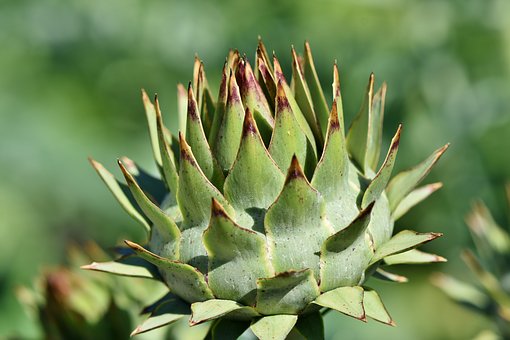
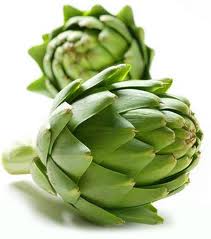 The large thistle-like plant is native to the regions of southern Europe, North Africa, and the Canary Islands. It is said that in about 800 CE, two groups of Moors were responsible for cultivation of the artichoke in Sicily and Spain. The word apparently derives from Arabic rather than Greek, suggesting the Moors may have cultivated the vegetable first. The leaves of the plant are used medicinally. However, the roots and the immature flower heads may also contain beneficial compounds. The globe artichoke is high in Vitamin C, folic acid, and potassium. As it also stimulates bile, it is not recommended for those who suffer from gallstones.
 Zhu X, Zhang H, Lo R. Phenolic compounds from the leaf extract of artichoke (Cynara scolymus L.) and their antimicrobial activities. J Agric Food Chem. 2004 Dec 1;52(24):7272-8.
A preliminary antimicrobial disk assay of chloroform, ethyl acetate, and n-butanol extracts of artichoke (Cynara scolymus L.) leaf extracts showed that the n-butanol fraction exhibited the most significant antimicrobial activities against seven bacteria species, four yeasts, and four molds. Eight phenolic compounds were isolated from the n-butanol soluble fraction of artichoke leaf extracts. On the basis of high-performance liquid chromatography/electrospray ionization mass spectrometry, tandem mass spectrometry, and nuclear magnetic resonance techniques, the structures of the isolated compounds were determined as the four caffeoylquinic acid derivatives, chlorogenic acid (1), cynarin (2), 3,5-di-O-caffeoylquinic acid (3), and 4,5-di-O-caffeoylquinic acid (4), and the four flavonoids, luteolin-7-rutinoside (5), cynaroside (6), apigenin-7-rutinoside (7), and apigenin-7-O-beta-D-glucopyranoside (8), respectively. The isolated compounds were examined for their antimicrobial activities on the above microorganisms, indicating that all eight phenolic compounds showed activity against most of the tested organisms. Among them, chlorogenic acid, cynarin, luteolin-7-rutinoside, and cynaroside exhibited a relatively higher activity than other compounds; in addition, they were more effective against fungi than bacteria. The minimum inhibitory concentrations of these compounds were between 50 and 200 microg/mL.
Link to this article: Show: HTML Link • Full Link • Short Link
Share or Bookmark this page: You will need to have an account with the selected service in order to post links or bookmark this page. 


|
Subscribe via RSS or email: Follow us through RSS or email. Click the RSS icon to subscribe to our feed. 

|
Related Articles:
- Investigation of Lipids Profiles of Nigella, Lupin and Artichoke Seed Oils to Be Used as Healthy Oils
- Artichoke Leaf Extract Reduces Symptoms of Irritable Bowel Syndrome and Improves Quality of Life Dyspepsia Sufferers
- Phenolic Compounds From the Leaf Extract of Artichoke (Cynara Scolymus L.) and Their Antimicrobial Activities
- Artichoke Leaf Extract Reduces Mild Dyspepsia in an Open Study
- Artichokes Are Excellent for Digestive Health
You must be registered and logged in to comment.

Most Popular

Latest Articles

Popular Subjects
Health, fitness and longevity
Based upon the principles of health
in the Qur'an and Prophetic Traditions.
HealthyMuslim.Com
There are two bounties in which
most people lose out: good health
and free time. Al-Bukhari.
The information on this site is provided for educational purposes only. It is not intended as a substitute for professional advice of any kind.