Wednesday, 08 September 2010    HomeAbout UsUsing this SiteSpread the Word!Contact Us     


Are You Drinking Living Milk Or Dead Milk?
Filed under: Body
Saturday, November 15 2008 - by HealthyMuslim
Key topics: Raw Milk Pasteurized Milk Milk Homogenized Milk

Mail to a FriendPrinter friendly

Another way to ask the same question in this article's title is to say:

Are you drinking raw unprocessed milk or pasteurized, homogenized milk?

Well, let's first illustrate the difference. Which of the following is the more natural, healthier and wholesome food? One is a raw apple, the other is an apple strudel.
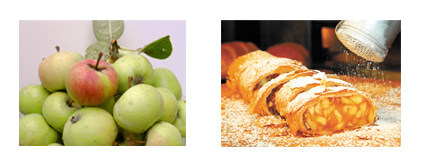
I'm sure you will agree that the raw apple is the more natural, healthier food. The other (in the apple strudel) is a cooked food. Well there is your answer!

If you are drinking pasteurized milk, then you are drinking dead, cooked milk. And that's just half the story. Milk is also "homogenized" and "standardized". When you go to your superstore or local grocery store to pick up some "pasteurized, homogenized" milk, you are not getting real, natural, wholesome milk. You are getting "cooked milk" in which the most beneficial elements have been either killed, depleted or made inert.

Pasteurization is when the the milk is heated usually to around 72 degrees celsius for a short time, after having been treated at around 65 degrees celcius for around 30 minutes whilst in storage. This results in dead bacteria and dead white cells that form pus - this stays in the milk. European and US law allows up to 400,000 and up to 750,000 cells of pus per one cubic centimeter respectively, to remain in the milk.

Pasteurising milk destroys the beneficial bacteria acidophilus, the Vitamins C, B12 and B6 and the digestive enzyme required to break down the protein in the milk. Also, as the bacteria's cell is broken and debris is scattered, histamine is released into the milk from the bacteria. This explains why there are so many dairy allergies and problems of eczema amongst children. Its because of pasteurized (cooked) milk.

Homogenization is when milk is put through tiny tubes (very small holes) at very high pressure in order to reduce the size of the fat globules. This makes the milk more even and will not result in separation of the fat from the milk in the form of a creamy layer at the top of the milk.

Homogenization is also used to partially address the problem of the pus that is formed as a result of dead bacteria and white cells.

The above two processes allow the milk to keep for longer for consumption purposes. But the difference between this cooked milk and live milk is immense. And we haven't even touched upon the growth hormone and antibiotics used that inevitably come through into the milk you drink - but we'll leave that for another article.

Expert Testimony From A California State Court Session

We're going to quote from a transcript of a court session in relation to the raw milk and pasteurized milk issue. This took place in the state of California and was in relation to a legal issue between the state and two farms providing raw, unprocessed milk.

The Court hearing involved two expert witnesses who speak about raw and pasteurized milk, the difference between them and food safety protocols and testing procedures. Its a 78 page document which you download yourself further below. We are going to reproduce just some of the expert witness testimony here to give you the essential points.

The two expert witnesses are very highly qualified individuals whose outstanding credentials are given within their expert testimony under cross examination. So you can be assured about the authority of their information and viewpoint.

Just to give a little background, the issue under investigation in this court session is to do with whether a testing standard used for pasteurized milk can be applied to raw milk, and in light of which essential differences between raw and pasteurized milk are brought to light.

Dr. Theodore Beals

Dr. Beals worked in Department of Epidemiology in the School of Public health, licensed as a Medicinal Practitioner, board certified in Anatomic Pathology after five years specialized training, published over 70 articles in peer-reviewed journals, has published a book related to pathology, served for 31 years as a pathologist at a Medical Center and taught Pathology at the University of Michigan to graduates and medical students, and was eventually made Chief of Pathology at the Pathology and Laboratory medicine Service in an Ann Arbor Medical Center. Later he served as the National Director of Pathology and Laboratory Services for the entire VA Medical Administration in the United States (which includes over a 100 medical centers across the US). He also served on the Scientific Advisory Board for the Armed Forces Institute of Pathology. He was called to give testimony on this matter.

Question: Okay. Dr. Beals, based on your background, education, training, your experience, do you have an opinion to a reasonable degree of scientific certainty whether milk that is unpasteurized is safe for human consumption?

Dr. Beals: My opinion is that it is, and historically it's been shown clearly that it is. Pasteurization was only introduced in about 1900. And the history of human consumption of milk goes back well before recorded history. And as a matter of fact, in recorded history we know that the domestication of animals for the purpose of providing fluid milk for human consumption is present in almost all civilizations across the world. And recorded history and historians have well documented the fact that this consumption of milk was in fact very advantageous to civilization. It was advantageous for cultures that migrated because they were able to take domestic animals with them and have a continuous supply of fluid milk. And it's well recorded also in history that the ability to take domestic animals that provided fresh milk with armies as they moved across the country was a distinct advantage to them.

If a food is unsafe for consumption, it is very quickly eliminated from the diet of cultures. And in fact history shows that the consumption of milk from domestic animals has persisted throughout history, and on the basis of that, I don't believe that there's any argument but that the consumption of fresh milk is in fact safe, confers competitive advantage to those that drink it.

Later in the same session ...

Question: Do you have an opinion about whether or not milk must be free from bacteria in order to be safe for human consumption?

Dr. Beals: And the answer to that is that it does not need to be free of bacteria.

Later ...

Question: You said that scientists need to know how do pathogens -- how do pathogens get into milk, and my question is: Which is more likely to have a pathogen in it? Some raw, fresh, unprocessed milk that has good bacteria in it or pasteurized milk where all the bacteria has been killed?

Dr. Beals: pasteurized milk where the beneficial bacteria have been killed.

Note a "pathogen" is a disease causing organism or entity. Dr. Beals says that pathogens are more likely to be found in the pasteurized milk where all the beneficial bacteria have been killed.

Dr. Ronald Hull

Dr. Hull is a PhD in Microbiology, thesis on bacterial antibiotics called colicins produced by E.Coli of interest today in food systems and medical health. Postdoctoral fellow in Pathology at Stanford Medical Center, worked on cancer research involving the E.Coli model. Worked as a research scientist for Commonwealth Scientific Industrial Research Organization that researches and develops rural industries in Australia including the dairy industry. After five years he became the head of the dairy microbiology section within the division of food science, and worked for twenty years in total for the organization. His work was related to medical pathology, spoilage and pathogenic bacteria in dairy microbiology. Australia and New Zealand contribute to more than half of all international trade in dairy products, and Dr. Hull is involved in an organization that oversees the very high level of technology needed to meet those markets and the meeting of microbiological standards for such foods. Dr. Hull then became a microbiology consultant to the dairy industry, and also serves on government regulation committees.

Question: Have you published research on that subject?

Dr. Hull: Yes, I have. If Listeria, for example, is inoculated into raw milk, then they're killed actively by the raw milk's natural antimicrobial systems.

Question: Did you say killed?

Dr. Hull: Killed, yes.

Question: How much time does it take before the Listeria is killed?

Dr. Hull: If you inoculate 10,000 Listeria into raw milk, then in 48 hours they're all killed. That's at body temperature.

Question: Was that research published in a peer review journal?

Dr. Hull: Yes, it was.

Further in the same session ...

Question: Dr. Hull, let's describe milk a little bit.

Dr. Hull: Yes.

Question: Is all milk the same?

Dr. Hull: No, definitely not.

Question: What types of milk are there?

Dr. Hull: Well, there is raw milk. Raw market milk, I'll describe first, is a living food. And on the other hand we have pasteurized milk, which is a cooked -- I would describe it as a dead food. The raw market milk is living just as you and I are living because it contains a number of live components. The first one -- the first component is the competitive flora, which are the same microorganisms that live inside of our intestinal tract when we're healthy. It's the same flora that's used to make cheese and yogurt. That competitive flora competes out other pathogens. And we use that in commercial production. We have available to us now strains of lactic acid bacteria for use in specific ferments which will kill all of the pathogens which can exist in that particular product. So that's highly developed science. And not only is it science, but it's in commercial practice.

Question: What's the second component?

Dr. Hull: The second component is what nature provided in milk from the mammal, and that again we refer to as innate immunity. Innate immunity consists of several components, at least five or six components. There are probably more, but for today we'll just discuss a few of them. The first one is raw milk contains white cells, which if you like are the --

MS. RUUD: I'm sorry?

THE WITNESS: Contains white cells -- sorry if I didn't say it clearly -- which are the same cells that our immune system, our innate immune system, uses to combat infection. That same system is in milk and operating when it's drawn from a cow. We then have a subset of enzyme systems which are destined to kill pathogens which get into milk. And just to mention five of those systems, there's the complement system, which I'll just mention the temperature of inactivation as we go. The complement works with the white cells. It's inactivated at temperatures -- I'm going to use Celsius here -- 56 degrees Celsius. I apologize. We have been using Celsius now for about 35 years, and I have difficulty converting back to Fahrenheit. Although I did learn Fahrenheit at school. So we have complement, which is inactivated at 56 degrees, which is way below body temperature. So it's just a little above body temperature. Body temperature is 37 degrees, just for reference. The second element is the lactoperoxidase system, which is inactivated at 82 degrees centigrade. And the third one is lactoferrin, which is inactivated at about 95 degrees centigrade, which is nearly boiling. And the last one, last enzyme, survives boiling.

So if we look at pasteurized milk, the white cells are killed, the complement system is killed, but the other three remain active. So we've essentially killed off half of the innate immunity in milk.

Question: And innate immunity, that's the second component of raw milk that makes it a living food.

Dr. Hull: That makes it a living food. The third component is --

Question: Let me get a question on the record. What's the third component?

Dr. Hull: Thank you. The third component is a group of enzymes which digest the milk. Milk consists of fat, proteins, carbohydrates, and minerals. They're in a very complex state in milk, very concentrated form, and very difficult to digest without those enzymes. Those enzymes there are specifically to digest each of those components down into smaller molecules. Those smaller molecules are the things that we absorb when we drink milk. They're also the nutrients for the competitive flora, the number one living system in milk. So the natural enzymes in milk actually foster the protective flora in milk. And so the three work together. But in pasteurized milk, or cooked milk if you like, those systems are essentially dead.

So the two milks are very different. One is a living food. And I've brought an apple up with me. This is a living food. When we cook it, it's a dead food. And raw milk is like the apple. Cooked, the pasteurized milk is like the apple strudel. And food safety issues with these two products are very different.

Later in the session ...

Question: Well, let's talk about the difference, then, between a glass of pasteurized milk and a glass of unpasteurized raw milk.

Dr. Hull: Yes.

Question: If you set those two milks out and let them sit at room temperature, what happens to them after a certain period of time?

Dr. Hull: Thank you. If we set raw milk, which is the living food, aside at room temperature, it will curdle, and that product is perfectly safe to drink. If you set it aside at body temperature, in other words, if you carry it around in your pocket or sit it next to the stove at body temperature, it will also curdle or sour, and that product is perfectly safe to drink. It will not make you sick. In contrast, if you set aside pasteurized milk at room temperature or body temperature, it will spoil and putrefy, and if you do drink it, it will make you sick. In fact it may make you very sick. So the two products have a quite different behavior if just left at room temperature or body temperature. Now, the same thing happens when we drink those products. One turns to a sour yogurt-type product; the other one putrefies. And I think the two products are quite different in that respect.

Later ...

Question: Does raw milk with a built-in immunity system, then?

Dr. Hull: Yes, it does.

Question: And because of that immunity system, can raw milk be subjected to a less, quote, clean environment?

Dr. Hull: Yes, definitely. And that's part of the reason I brought this apple here. I can leave this apple sitting around for I don't know how many weeks in California, but certainly at home an apple or orange can sit on the kitchen table or outside for many days and still be fine to eat. Not a health hazard, not a food safety issue. But if we cook that product, then we cannot do that. We have to protect it from contamination, from infection, from the environment because it has no longer living immunity in the apple.

You can download the full transcript in PDF here: Expert Witnesses Defend bacteria in Raw Milk
Right click and select "Save As" or "Save Target As".

What milk Should You Buy?

If you are in a position to get raw milk, you should try it. Just ensure that the farm you are buying from has established hygiene standards in the collection and bottling of milk and also have pathogen count tests on their milk. They should give you this information if you ask. Here are some resources to help you find raw milk providers:

For the vast majority of people it may be difficult to get raw unprocessed milk. In that case you should try to buy organic pasteurized milk which is NOT homogenized. If you can't get it organic, then get pasteurized non-homogenized milk. By doing this, you are limiting the extent of the problem with processed milk. If its organic, which means the cows are pasture fed, then even if it is pasteurized, it is milk that will have better quality. So your ideal choice in the absence of real milk, is organic, pasteurized but non-homogenized milk.

Alternatively, you should try making your own almond milk, which is what we do, in addition to sourcing raw milk and buttercream. It's great with a healthy cereal. By the way the vast majority of cereals are not healthy - despite the propaganda - but we'll have to leave this for another article.


Link to this article:   Show: HTML LinkFull LinkShort Link
Related Articles:
Comments


  1
HealthyMuslim - posted on Saturday, 15 November 2008 18:56

An interesting comment posted by someone on a blog and with whose sentiments we would largely agree with:

Spend just one day at an industrial dairy farm watching 2,000+ cows in dark, miserable, filthy, fetid conditions, eating unidentifiable, semi-trucked-in glutenous clumped waste product "food". (I hope all those stories about all those euthanized dogs, pets and horses ending up at rendering plants selling farm feeds just isn't true!)

Watch the $7 an hour attendants with goggles and respirators at work, dropping and dragging milking nozzles in ankle deep feces and then attaching them to dirty, muddy teats with total indifference. Watch the cows getting their injections of steroids, growth hormone and antibiotics to produce 10x more milk than it is natural for them to.

Then the milk travels through a mile or more of chemically "cleaned" hose lines into holding tanks, then through another half-mile of hose to waiting trucks. Next, follow the trucks traveling up to 70 miles to a commercial facility where the milk is then piped through several more miles of chemically "cleaned" pipes to be "filtered" for solid matter, like bits of dirt and feces, then piped to be pasteurized and homogenized. (By the way, pathogens and everything else that is 'killed' by the pasteurizing process stays in the milk.)

Note the nearby 55 gallon drums of chemical solvents and disinfectants. (Gee, I really hope that they aren't using any 'bad' chemicals to clean the same pipes and tanks the milk runs through!) From there, the milk is either piped into a nearby bottling facility or into holding tanks again to be trucked to another facility for bottling and labeling.

Then the milk is transferred to distribution plants for major grocery store chains, where it gets to sit a little longer. (Hmmm, hopefully, the refrigeration systems in all of these different facilities and all these trucks were working properly the whole time). Hundreds of gallons of gas later, the milk is delivered to a grocery store where you can buy it. About $2.99 a gallon, and less than $1.00 goes to the commercial "farmer".

The dozens of semi-skilled and unskilled hourly workers care more about their paycheck than this milk. It's all about production levels (Profit) on industrial farmed milk.

After I witnessed all of the above, I sought out a local organic certified family run farm with a couple of dozen cows out in beautiful grassy pastures, a bright, small, CLEAN bottling facility with a dozen or so hand-labeled bottles of milk in a walk-in refrigeration unit. About $6.00 a gallon - and it all goes to the farmer who produced it.

My raw milk only travels when the cows are walking back from the pasture to be milked, or when a member of this 3rd generation farming family hand carries it from the cow to the refrigerator. The farmer's family who produces the milk depends on it for their reputation and livelihood. They drink their own milk. Their customers are friends and neighbors, so the trust runs both ways. The animals are not pumped full of hormones and drugs, and any sick cow is removed from the milking line while being treated by the local vet.

So, commercially produced, COOKED milk from industrial facilities manned by wage slaves and trucked in from ? miles away, or natural, raw milk from a small, clean family farm? It's a no-brainer.

My family and I have drunk raw milk exclusively for years without a single problem and all enjoy excellent health. We will never go back to cooked and drugged mystery milk. I am glad we live in a state that allows raw milk. I pity those in North Carolina. Can't even choose where your family's milk comes from. I wonder what freedom the government or some government shill will want to take away next under the guise of "protecting us"...


  2
A Butah - posted on Sunday, 16 November 2008 09:44

Asalaamu 'alaykum,

You can buy raw milk in the UK (not from supermarkets) and I believe it is legal.

E.g. http://www.hookandson.co.uk/page4/page4.html


  3
Khadijah Z - posted on Sunday, 16 November 2008 11:14

This is great but I'm in Egypt and here you either buy it packaged or raw. However the raw is from the teat to a can to you and they still boil it as many as i have been told get ill from this as it comes from small farms and you do not see how clean they are or not, so what is the best for you may not in some cases be the safest for you


  4
HealthyMuslim - posted on Sunday, 16 November 2008 14:00

When getting raw milk you have to "know your source". In western countries, farms that supply raw milk will be complying with certain standards and would be getting regular pathogen tests or counts done on their milk. If you are going to get some raw milk, you can ask the farm keepers about their standards and testing. Milk is just like any other food which can undergo contamination such as salads and meats, a potential for food poisoning. So you have to know your source and ensure it meets standards of food hygiene.


  5
HealthyMuslim - posted on Monday, 17 November 2008 06:55

For those who are not able to get raw milk from a farm that is tested and passes hygiene standards, you should try to buy non-homogenized milk only from your local supermarket. That's better than getting milk that is both pasteurized and homogenized.


  6
THAARIQ - posted on Wednesday, 19 November 2008 01:34

ASSALAMU ALAIKUM WARAHMATHULLAHI WABARAKATHUHU!

DEAR BROTHERS & SISTERS IN ISLAM,

TC. KIT. BEST RGDS.

JAZAKAMULLAHU KHAIRAN!


  7
Talha Shahid - posted on Wednesday, 19 November 2008 12:29

As salaamu 'alaykum

Great article mashaAllah. I will start my search for raw milk or organic pasteurized non-homogenized milk here in Tri-State Area.

BarakAllahu feekum


  8
Mohammad - posted on Sunday, 07 December 2008 22:09

Assalaamu'alaikum.

How does raw cow's milk compare with raw goat/sheep's milk or any other milk for that matter?

Is any raw milk good for everyone?

Jazaakumullaah khairan.


  9
healthymuslim - posted on Sunday, 14 December 2008 20:05

There are differences in protein, fat and general nutrient composition etc. and texture. There is a lot more detail to this, but perhaps here is not the place to cover it.

Regarding raw milk, it should be made absolutely clear that we are not talking about any old raw milk from any old farm. We are talking specifically about fresh, pure raw milk taken from cows that are fed on grass, from farms meeting the state laws on hygiene and pathogen and microbial testing. In the US there are certified farms that are allowed to sell raw milk. In the England and Wales, all farms providing access to bottled raw milk have to abide by strict regulations with regards to coliform and pathogen testing. These regulations are actually much stricter than those for milk that is destined for pasteurization.

So the answer is raw milk from farms feeding their cattle on grass, herbage and meeting regulations on hygiene and coliform and pathogen testing. In other words, "know your source", as the saying goes.


Add a Comment (comments are currently moderated)
You must be registered and logged in to comment.



Article Serialization on Important Topics


Search This Site
Latest Articles
Immune-Boosting Benefits of White Button Mushrooms
The Brain Diet for Improved Mood, Memory and Better Concentration
Eating Oily Fish Helps Protect Eyesight
Rosemary Is a Powerful Brain and Nerve Tonic
Junk Food Diet Increases Allergies in Children
Exercise Enhances Brainpower and Mood, and Prolongs Lifespan
Vitamin D Better Than Vaccines At Preventing Flu, Report Finds
Adding Herbs and Spices to Meat Cuts Cancer Risk
Household Cleaners Associated With Doubling Risk of Breast Cancer
Antioxidants Help Arteries Stay Healthy
Latest Comments
The Mufti of Saudi Arabia, Shaykh Abdul-Azeez Aal ul-Shaykh stated recently his emphasis - based upo ...
by HealthyMuslim (634930 minutes ago)
Royal jelly is a creamy substance found in the salivary glands of bees. It is primarily a nutrient-r ...
by SoundHealth (833112 minutes ago)
Assalamulaykum I really loved this artical. It was MasAllah brilliant. I did 546 skips under 19 ...
by Hamza (833481 minutes ago)
JazakAllahkhair. You mentioned Royal Jelly and Bee Pollen. What are these and how are they used? ...
by Muslima (833486 minutes ago)
Thanks for compiling these info. ...
by LivingHalal (834211 minutes ago)
thank you very much for the article , I have thin hair . I hope this could help ...
by geegee (834726 minutes ago)
As salaamu alaykum, you would be looking at topical application with a suitable cream (or you could ...
by healthymuslim (859362 minutes ago)
Dear Assalamaualaikum, Kindly advice how to use the aloe vera for pysoriasis treatment as i have t ...
by Ahmed (859766 minutes ago)
As-salaamu alaykum, The hadeeth mentions the actual seed not seed oil,is it t ...
by Arif Mahmood (860458 minutes ago)
Black seed oil contains fifteen amino acids, including eight of the nine essential amino acids (thes ...
by SoundHealth (861747 minutes ago)
Most Popular
How To Eat Fruit Properly
Garlic, Honey and Apple Cider Vinegar: Must Have Excellent Home Remedy
Five Superfoods You Should Be Eating Everyday
Deodorant And Anti-Perspirant Dangers - Do You Know What You're Putting Under Your Armpits?
What Foods Are Good For Your Eyesight?
The Different Kinds Of Exercises Your Body Needs
Foods for Healthy Hair
Flax Seed, Black Seed Oil and Honey Oat Porridge - Absolutely Great For Your Health
Are You Drinking Living Milk Or Dead Milk?
Calculate Your Body Mass Index (BMI) Value

Tags
acid acid alkaline balance acne acrylamide additives aerobic exercise ageing aging air air freshener alfalfa alfalfa sprouts alkaline allergies allergy allicin almonds aloe aloe vera alopecia alum stone aluminium Alzheimer's amino acids anthocyanidins anthocyanins anti-aging antibacterial anti-bacterial antibiotic antibiotics antibiotics antimicrobial anti-microbial antiobiotic antioxidant antioxidants anti-perspirant anxiety appendicitis apple apple cider vinegar apples apricot apricots arthritis artichoke arugula asparagus aspartame assimilation asthma atopic dermatitis aubergine autism avocado avocados bacteria banana barley basil bathroom beans beet beetroot berries Beta-carotene beverages bioflavonoids bisphenol A bitter melon black pepper black seed black seed oil blackberries blackcurrant blood pressure bloodletting blueberries blueberry body mass index body pH bone health bones borage oil bowel cancer brain brain cancer brazil nut bread breast cancer breast feeding breastfeeding breathing broccoli brown rice brussel sprouts Brussels sprouts buckwheat Budwig Protocol burns butter butternut squash cabbage caffeine calcium calories camel's urine cancer candida cantaloupe melon carbohydrates carcinogens cardamom cardiovascular cardiovascular disease carob carotenoids carpal tunnel syndrome carrot cashew nut cataracts cauliflower cavities celeriac celery cell phone cereals chamomile chard CHD cheese cherries chia seeds chickpeas chicory chili pepper chilli chilli pepper chocolate cholesterol cholestrol chronic illness cilantro cinnamon citron clarified butter cleaners cloves cocoa coconut coconut oil Codex Alimentarius co-enzyme Q10 coffee cola cold cold sore colds colic colon cancer combining foods common cold compost concentration condiments contagion cookware coriander corn cos lettuce cottage cheese cough cough medicine courgette couscous cranberries cress cruciferous cruciferous vegetables cucumber cumin cupping curcumin cure CVD dandruff dates dehydration dementia deodorant depression detox DHA diabetes diet digestion digestive cycles dips dopamine dried fruit dry cupping dust mites eating habits echinacea eczema eggplant eggs EMF endive energy enzymes EPA esophageal cancer essential fatty acids essential oil excitotoxin exercise eye exercises eye health eyesight falafel fasting fats fatty acid fatty acids fennel fenugreek fermentation fertility fiber fibre fig fish fitness flavonoid flax flax oil flax seeds flaxseed oil flu flu vaccine fluoridated water fluoridation fluoride fluoride-free toothpaste fluorosis folate folic acid food combination food combining food digestibility food poisoning formaldehyde free radicals fructose fruit fungal infections garbanzo beans gardening garlic genotoxin ghee ginger ginseng glucosamine glucose glutamine glutathione glycation glycemic index goji berry gout grain grains grapefruit grapes green beans green tea guava gum disease gums hair hair loss happiness hazelnut HDL headache healing health heart heart attack heart disease heavy metals henna Hepatitis B herbs high fructose corn syrup high fructrose corn syrup hijaamah hijama Himalayan crystal salt hina homogenized milk honey hormones household products houseplants hummus immune system infectious disease infertility inflammation inflammatory response influenza insomnia intoxicants IQ iron irritable bowel Johanna Budwig joints juice junk food kale kiwifruit lavender lawsonia inermis LDL leeks legumes lemon lemon-grass lentil soup lentils lifespan lime linseed linus pauling lipoproteins live long long life longer life longevity lung cancer lutein lycopene magnesium maize mango manuka honey margarine marjoram meat medical industry medicinal treatment medicine melon memory menopause menstruation mercury metabolism migraine migraines milk millet mind mineral minerals mint miswak MMR mobile phone mold monosodium glutamate monounsaturated fats mood MSG muscles mushroom mustard mustard seeds myrtle nails natural health nausea nervous system nigella sativa nigella seeds night shift nutmeg nutrition nuts oats obese obesity oil olive oil olives omega-3 omega-6 omega-9 onion onions orange oregano organic organic honey osteoarthritis osteoporosis ovarian cancer overweight oxidants pancreatic cancer papaya parabens Parkinson's disease parsley passion fruit pasteurization pasteurized milk patience peanuts pear peas pecan nuts peppercorn peppermint peppers perfluorinated chemicals perppermint personal care personal care products pesticides PFOA pH pharmaceutical industry phenylalanine phosphate phospholipids phosphorus phytochemicals phytonutrients pine nut pineapple pistachio nut plums pollution polyphenols polyunsaturated fats polyunsaturated fatty acids pomegranate popcorn porridge postnatal depression postpartum depression posture potassium potato potatoes prebiotic prebiotics pregnancy premenstrual syndrome probiotic probiotics propylene glycol prostate cancer protein prunes psoriasis PUFA pulses pumpkin quark quince quinoa Qur'aan quran radiation radish raisins ramadan raspberries raw honey raw milk red cabbage respiratory problems resveratrol retinol rhubarb rice rocket romaine lettuce rosemary running saffron sage salad salmon salt saturated fat saturated fats sauerkraut schizophrenia seeds selenium semolina senna serotonin sesame oil sesame seeds silica sinusitis siwak skin skin cancer skipping sleep SLS soda sodium sodium benzoate sodium lauryl sulfate soft drinks soup spices spinach sprout sprouting sprouts St Johns Wort St John's Wort starch stimulants strawberries stress stroke sucralose sugar sulfur dioxide sulphur sunflower seeds sunlight superfoods sweet potato sweetcorn sweetener swine flu swiss chard tahini talbina tea teeth teflon tension headache Thimerosal thinking thyroid disease tomato toothpaste toxic toxic chemicals trace elements trace minerals trans fat triclosan turmeric type 2 diabetes ubiquinol unlawful medicine unpasteurised milk vaccination vaccinations vaccine Vaccine Damage vaccines vegetables vinegar viral infections vision Vitamin A vitamin B vitamin B12 Vitamin C vitamin D Vitamin E vitamin K walking walnut water water fluoridation water fluoridatoin watercress watermelon weight weight loss wet cupping wheat wheatgerm whole grains yoghurt zeaxanthin zinc zucchini

Archives
September 2010
August 2010
July 2010
June 2010
May 2010
April 2010
March 2010
February 2010
January 2010
December 2009
November 2009
October 2009
September 2009
August 2009
July 2009
June 2009
May 2009
April 2009
March 2009
February 2009
January 2009
December 2008
November 2008
October 2008
September 2008


This site provides information for the purpose of education only. The content on this site is not intended as specific medical advice to your personal condition. You should seek professional medical advice for your personal circumstances. HealthyMuslim.Com does not hold any responsibility for use of this material in any form. Use of our website indicates your agreement to our terms and conditions. All trademarks mentioned on this site are the intellectual property of the respective owners.

© 2008 HealthyMuslim.Com. All rights reserved.
Your guide to Muslim health Muslim diet Islam health