
Why Butter Is Better
© HealthyMuslim. See Terms and Conditions
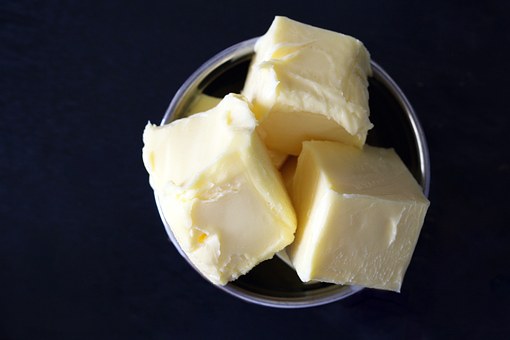
The scholar Ibn al-Qayyim in his Prophetic Medicine mentioned some of the benefits of butter. He said that butter:
- Heals inflammations, including in the kidneys and mouth
- Has a laxative effect
- Calms the nerves
- Can be rubbed onto children's gums, to assist in the formation and growth of their teeth
- Is beneficial for a cough
Butter For Good health
Unlike margarine or other vegetable spreads, butter is a real, natural food. It contains beneficial saturated fats, which are essential for a healthy body, as well as a wide range of other nutrients including:
- Vitamins: butter is a rich source of easily absorbed Vitamin A, also known as retinol. This vitamin is needed for a wide range of functions in the body, from maintaining good vision, to strengthening the immune system from infections.
Butter also contains all the other fat-soluble vitamins, vitamins D, E and K.
- Minerals: butter is rich in trace minerals, especially selenium, a powerful antioxidant. Ounce for ounce, butter has more selenium per gram than either whole wheat or garlic.
In addition, butter is a good source of iodine, in a highly absorbable form. Iodine is needed to make thyroid hormones, which help to keep cells and the metabolic rate healthy.
- Fatty Acids: Many of the saturated fats in butter have strong anti-cancer properties. Butter consists of short and medium chain fatty acid chains, which have strong anti-tumor effects. Butter also contains conjugated linoleic acid (CLA), which gives excellent protection against cancer, and aids weight loss. Research has found that CLA is found in much higher concentrations in milk and butter from grass-fed cows. [1]
Butter also contains glycosphingolipids, a special category of fatty acids that protect against gastrointestinal infections, especially in the very young and the elderly.
- Lecithin: Butter contains lecithin, a fat-like substance needed by every cell in the body. It protects cells from oxidation and assists in the proper assimilation and metabolism of cholesterol and other fat constituents.
- Cholesterol: butter is a good dietary source of cholesterol, which, despite the hype does not cause heart disease. In fact, a Medical Research Council survey showed that men eating butter ran half the risk of developing heart disease than those using margarine.
Cholesterol is a potent antioxidant that enters the blood to combat harmful free radicals, and is needed to maintain intestinal health, and for correct brain and nervous system development in children.
Butter and weight gain
Butter does not cause weight gain. This is because the short and medium chain fatty acids in butter are not stored in the adipose tissue (also known as body fat), but are instead used for quick energy. Fat tissue is composed mainly of longer chain fatty acids. [2] These come from olive oil and polyunsaturated oils as well as from refined carbohydrates.
Margarine is a man-made, processed food, created chemically from refined polyunsaturated oils. The process used to make these normally liquid oils into spread-able form is called hydrogenation.
Margarines are made by heating vegetable oils to extremely high temperatures. This insures that the oils will become rancid. After that, a nickel catalyst is added, along with hydrogen atoms, to solidify it. Nickel is a toxic heavy metal and amounts always remain in the finished product. Finally, deodorants and colorings are added to remove margarine's horrible smell (from the rancid oils) and unappetizing grey color. During the solidification process, harmful trans-fatty acids are created which are carcinogenic and mutagenic.
Margarine and similar hydrogenated or processed polyunsaturated oils are potentially more detrimental to your health than any saturated fat, as is explained elsewhere on this site.
What would you rather have: a real, natural food with an abundance of healthful qualities or a lump of processed and deodorized slop?
Choosing butter
When looking for good quality butter, raw is always best. But this can be hard to find, so organic butter from grass-fed cows is the next best thing. Most cows are grain-fed, and are given antibiotics and growth hormones, residues of which remain in their meat and milk. Butter from grain-fed cows is also very high in omega-6 fatty acids, and low in omega-3. A healthy diet is dependant on the correct balance between these two fatty acids, but the modern diet usually contains much higher levels of omega-6 already. This imbalance is thought to be one of the causes of inflammation which leads to disease. On the other hand, butter from grass-fed cows has a higher content of omega-3 fatty acids.
Remember that like all foods, butter should be eaten in moderation and as part of a healthy diet.
References
- [1] Belury, MA Conjugated Dienoic Linoleate: A Polyunsaturated fatty acid with Unique Chemoprotective Properties (p 83-89). Nutrition Reviews, April 1995 53:(4) 83-89.
- [2] Valero, et al Levels of linoleic acid in adipose tissues reflect the amount of linoleic acid in the diet. Annals of Nutritional metabolism, Nov/Dec 1990 34:6:323-327.
Link to this article: Show: HTML Link • Full Link • Short Link
Share or Bookmark this page: You will need to have an account with the selected service in order to post links or bookmark this page. 


|
Subscribe via RSS or email: Follow us through RSS or email. Click the RSS icon to subscribe to our feed. 

|
Related Articles:
- Why Butter Is Better
- The Importance of Saturated Fats in the Diet
- The Dietary Fat, Cholesterol and Heart Hypothesis: What if Bad Fat Isn't So Bad?
- The Many Benefits of Coconut Oil
- The Big Fat Con: Saturated Fat and Cholesterol
- Black Seed Oil (Nigella Sativa) And Its Disease Preventing Effects
- Nutrition Basics: What Are Fats?
You must be registered and logged in to comment.

Most Popular

Latest Articles



Popular Subjects
Health, fitness and longevity
Based upon the principles of health
in the Qur'an and Prophetic Traditions.
HealthyMuslim.Com
There are two bounties in which
most people lose out: good health
and free time. Al-Bukhari.